
AI for business ownersAI literacydecision-makingcontext gappractical AIGroundlens
AI Solved a Medical Mystery. What It Means for Business.
A woman used AI to solve a medical mystery doctors missed. The lesson isn't about healthcare. It's about the context gap that kills business decisions.

A woman had a brain tumor. Two surgeries didn't fully remove it. The drug that controlled its growth came with a side effect: random, crushing fatigue that could hit at any moment. Brain fog, nausea, lightheadedness. She never knew when it would strike.
Doctors couldn't figure out the fatigue. She saw multiple primary care doctors. None helped.
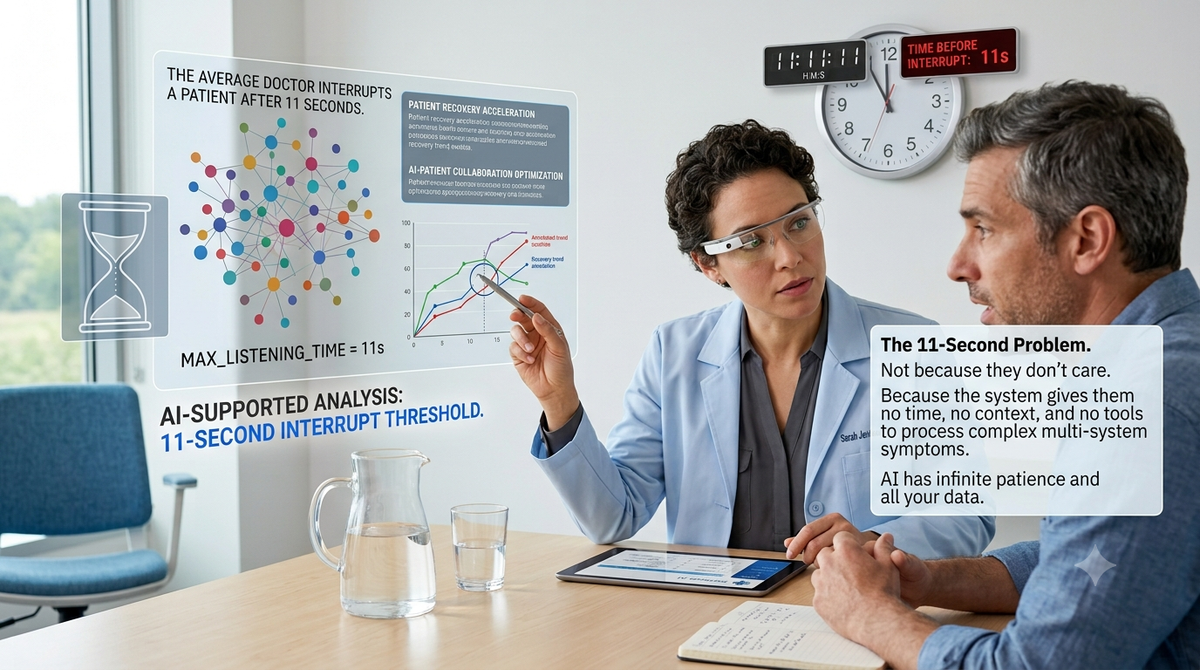
So she used AI. Not to replace her doctor. To do what her doctors didn't have time to do: listen to everything, look at every test result, and think about it for more than 11 seconds.
It worked. She's been symptom-free for a month.
I found this story through Tim Ferriss's newsletter, and it stopped me in my tracks. Not because of the medical outcome. Because of what it reveals about where AI actually creates value. The original deep dive is from AI researcher Amy Deng, who wrote about the full process on her Substack. She also open-sourced her investigation method on GitHub.
This isn't a healthcare story. It's a story about a gap that exists in every business I've ever worked with. Let me explain.
What she actually did
Her name is Amy Deng. She's an AI researcher, which matters. Not because you need to be one to do this, but because she knew how to use AI well and how to spot when it's wrong.
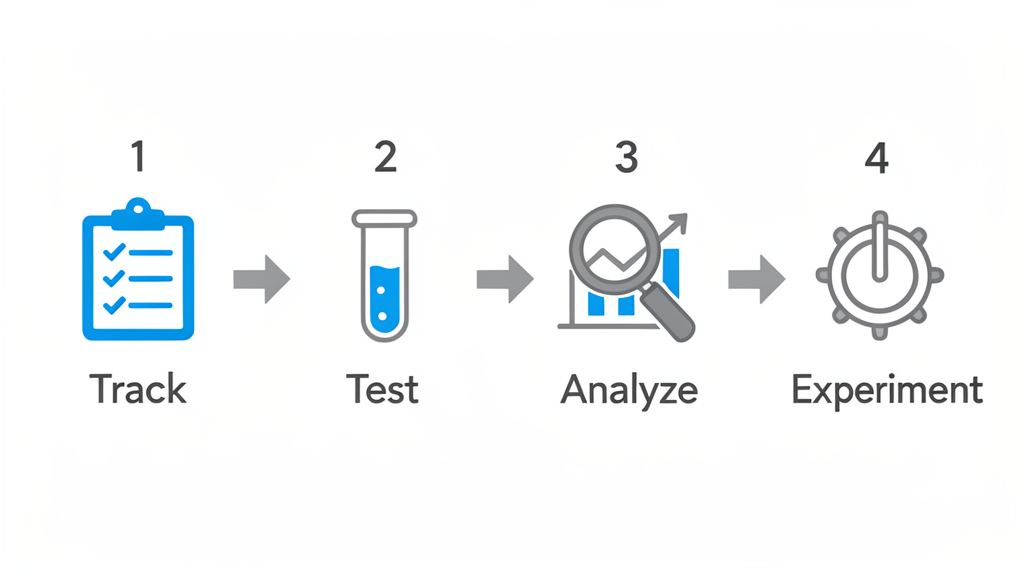
She followed four steps. Simple enough that anyone could follow them.
1. Track everything. She logged her symptoms hourly in a spreadsheet. Energy level, what she ate, when symptoms hit, what made them better. She used a Garmin watch for sleep and steps, an app for food tracking. About 20 minutes a day.
2. Test with purpose. She asked the AI what blood tests might be relevant given her symptoms and history. Then she asked her doctor to order them. Not randomly. Targeted, based on hypotheses the AI helped generate. Reasoning models like Claude and ChatGPT Plus are the ones Amy credits for this kind of structured hypothesis work. She called the $20/month subscription "the most worthwhile $20 I've spent in my health journey."
3. Analyze together. This is the key step. She fed the tracked data AND the test results back to the AI together. Not in pieces. All at once. The AI could see patterns that no single doctor visit would catch, because no doctor has all your data in front of them at the same time.
4. Experiment carefully. Based on the analysis, she made changes. Supplements, timing of medication, lifestyle adjustments. Always with her doctor in the loop. Not replacing medical advice. Complementing it.
What AI actually did here
Let me be clear about what the AI did and didn't do, because the story is easy to misread.
The AI did NOT replace her specialist. Her neuroendocrinologist gave her more clarity in 20 minutes than dozens of hours with AI models. The expert still matters.
The AI DID beat every primary care doctor she'd seen. It raised nearly every hypothesis the specialist's nurse practitioner offered. It even flagged a specialized test that the NP independently decided to order.
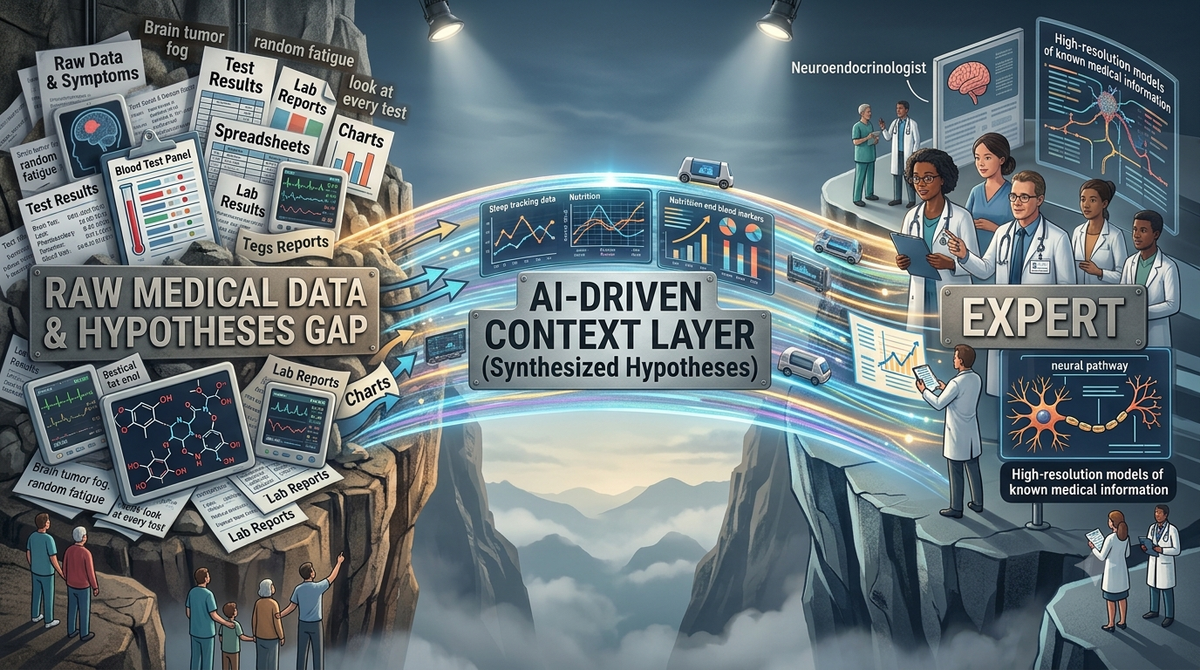
So where does AI fit? It fills the gap between "something is wrong" and "a specialist takes you seriously." That gap is where most people get lost.
The gap that exists in your business
You're probably not dealing with a brain tumor. But you are dealing with decisions that need more context than anyone has time to give them.
Think about the last time you had a business problem that didn't fit neatly into one box. Maybe it was about whether to invest in a tool, or hire someone, or change a process. You probably asked a few people, got conflicting advice, and made a decision with incomplete information.
That's the 11-second problem, but for business. No consultant has time to look at everything. No advisor has all your data. And the cost of getting it wrong isn't just money. It's time, momentum, and trust.
AI changes this. Not by being smarter than your advisor. By having all your context and infinite patience. You can dump every number, every history item, every constraint into a model and ask it to think with you. It won't interrupt you after 11 seconds.
Where this gets serious: privacy and limits
I need to be honest about something. Amy's story worked because she was willing to upload her full medical history to an AI model. She thought about privacy. She made an informed choice. But that choice isn't right for everyone.
If you're dealing with sensitive business data, client contracts, trade secrets, or anything covered by NDA or GDPR, you need to think about where your data goes before you dump it into a model.
There's another limit. Amy's story worked because she could critically evaluate what the AI told her. She's an AI researcher. She knew when the model was confidently wrong. Most people can't do that. That's the real risk. Not that AI is dangerous, but that it sounds sure of itself even when it's wrong.
What you can actually do with this
You don't need to be an AI researcher to use this. Here's the simplified version for any business decision:
Give it everything. Don't ask "should I hire someone?" Ask "here's my business, here's my revenue, here's my workload, here's my capacity, here's what I'm considering, here's what I'm worried about. What am I missing?"
Be specific. Don't say "sales are down." Say "sales dropped 18% in Q2 compared to Q1, mostly from repeat customers in the 35-50 age range who used to order monthly." The more specific you are, the more useful the answer.
Ask for what you might be wrong about. After the AI gives you an answer, ask: "What assumptions am I making? What would change this conclusion?" This is the step most people skip, and it's the one that catches blind spots.
Verify before you act. AI can be confidently wrong. Don't make a business decision based on a model output alone. Use it to inform, then verify with real data or a human expert.
The honest version
AI didn't solve Amy's medical mystery. Amy solved it, using AI as a tool, following a structured process, with her doctor in the loop. The AI was the context layer. The process was the method. The doctor was the expert.
That's the honest framing. AI is not a replacement for expertise. It's a replacement for the gap between you and the expert. The 11 seconds nobody has. The data nobody looks at together. The patience nobody offers.
For your business, that gap is where decisions get made badly. AI can help you make them better. But only if you use it like Amy did: with structure, with honesty about its limits, and with a real expert when the stakes are high.
Is recurring work behind the question?
Tell us what keeps happening in the free fit check. We will review whether Groundlens is the right next step.