
Role: System owner and builder Period: 2025 – present
Own build. Not a client result.
What an owned AI operating layer looks like in production
This is the operating layer I installed to keep Groundlens moving: scheduled briefings, durable decisions, reusable workflows, and human approval gates.

The situation
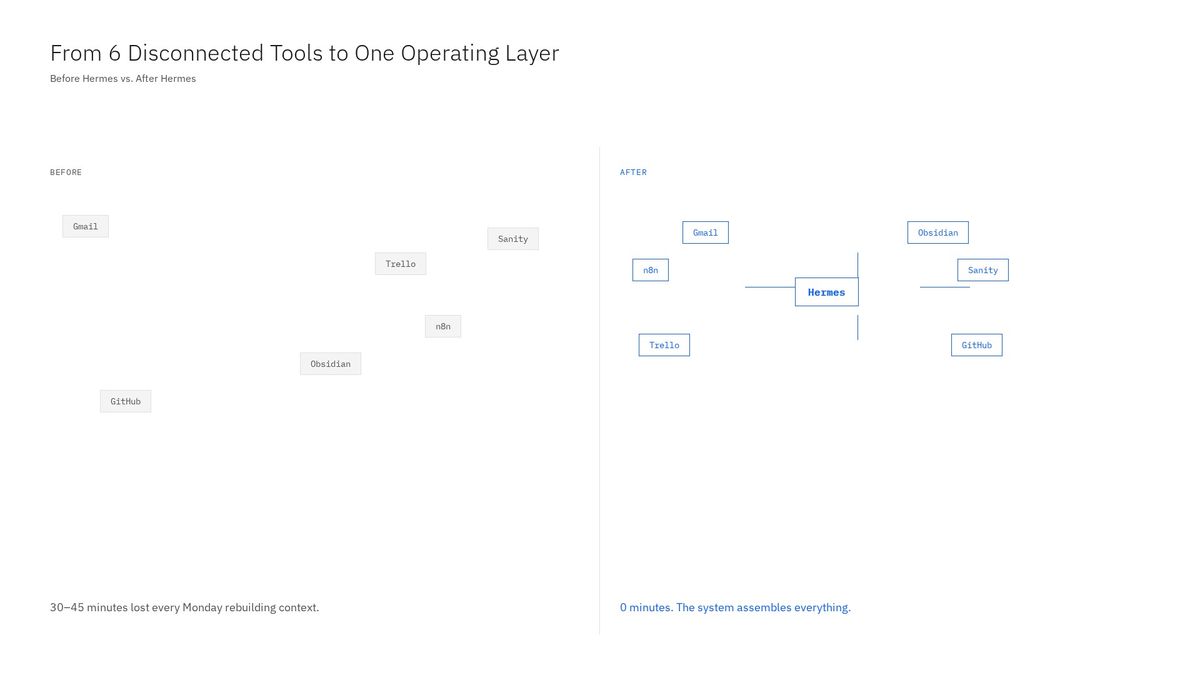
Work lived in too many places. Status sat in one tool. Decisions sat in email. Notes sat somewhere else. Starting the day often meant reconstructing context before any real work could start.
I built Groundlens to solve a coordination problem, not a tooling problem. The constraint was not more apps. The constraint was the missing layer between the tools I already had.
What this had to solve
Gmail, notes, project cards, code, content, and automations each worked alone. None kept shared context. Follow-ups depended on memory. Old decisions were hard to recover. Recurring work waited for me to start it.
If you run a company with field teams, office staff, customers, and exceptions, the shape is familiar: the tools are fine, the handoffs are not.
What I installed
I installed an operating layer on top of the existing tools. Not another dashboard. A system that prepares context, runs recurring work on a schedule, keeps decisions findable, and stops before consequential actions.
Central operator: one agent identity that knows current priorities and can start routine work without a fresh prompt every time.
Persistent memory: decisions, preferences, and session history stay available when a topic returns weeks later.
Reusable skills: repeated workflows become versioned procedures instead of one-off chats.
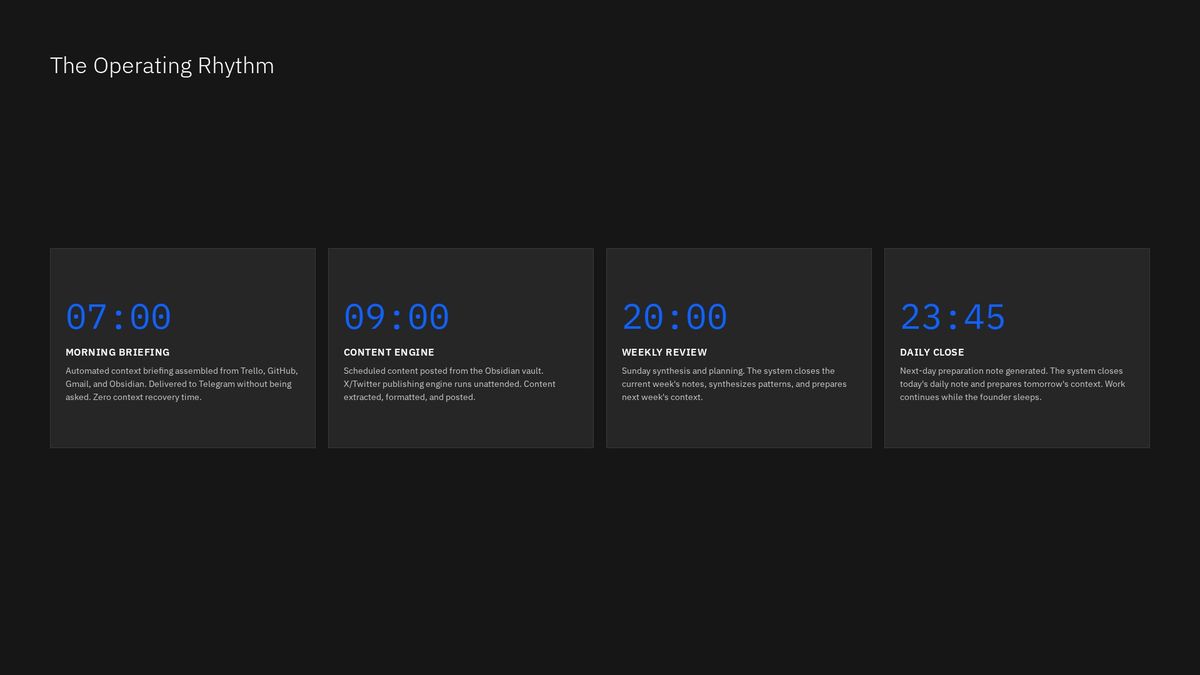
Scheduled rhythm: morning briefing, daily close, and weekly review run because they are scheduled, not because I remembered.
Task execution: work can move through a board with isolated workers and clear completion reporting.
Approval gates: external messages, publishing, money, credentials, and production changes stay human-owned.
Concrete results
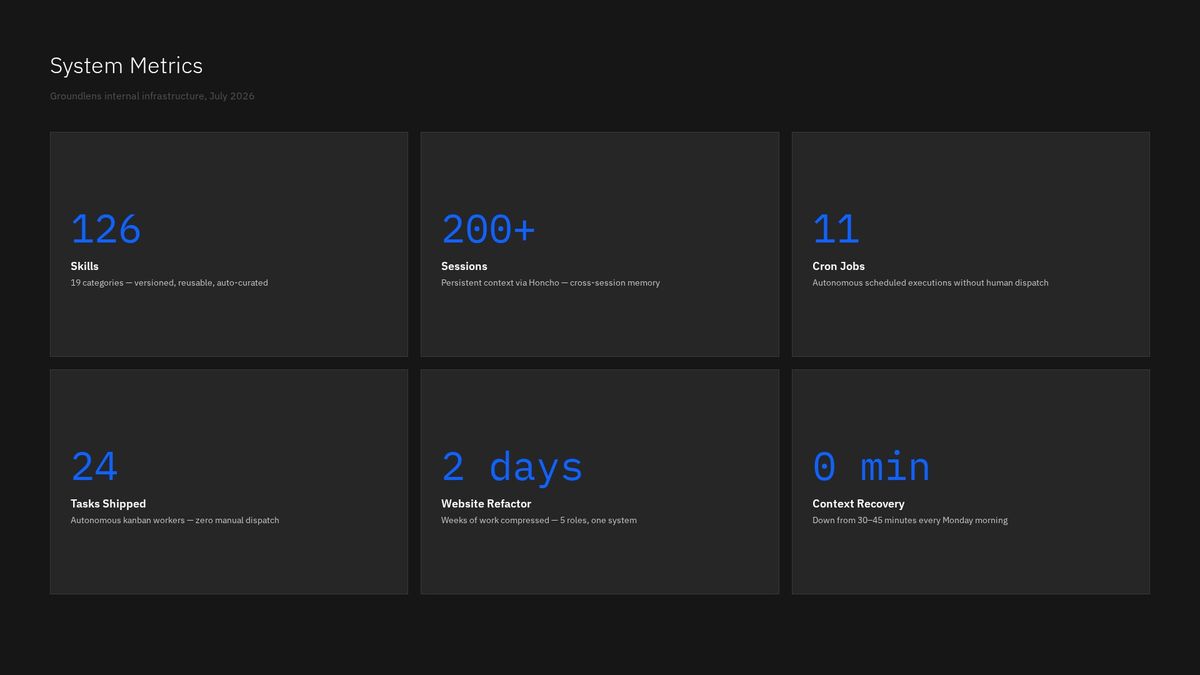
Hours recovered: Monday context reconstruction dropped from roughly 30 to 45 minutes of manual checking to a briefing that arrives already assembled.
Scheduled routines: 11 recurring routines fire on the system clock, including morning briefing and daily close.
Reusable procedures: 126 skills across recurring operating work, so solved problems become repeatable.
Execution: 24 tasks shipped through board workers without manual dispatch for each step.
Memory: 200+ sessions remain resumable with prior context instead of starting from zero.
Delivery compression: a website refactor that looked like a long manual delivery effort completed in 2 days of coordinated system execution under human review.
What keeps running without constant attention: briefings, closeouts, status assembly, draft preparation, and task movement inside approved bounds.
What remains human
The system does not own judgment. I still approve consequential actions. I still decide commercial direction. I still review anything external. Money, credentials, publishing, and client-facing sends do not go out on autopilot.
When the system is wrong, the failure should be visible and correctable. That is the point. Unattended magic is not the product. Owned operation is.
Why this is not just ChatGPT
Chat tools are strong for analysis and interactive work. This install is different because it sits across tools, keeps durable context, runs on a schedule, and uses explicit approval boundaries. The model is one component. The operating layer is the system.
What this means for a real company
I am the first install. I built this because the business could not depend on reconstructing work from memory every week. A company with 10 to 50 people has more people and more exceptions, but the same core gap: tools without a reliable layer between them.
This is work I did for Groundlens.
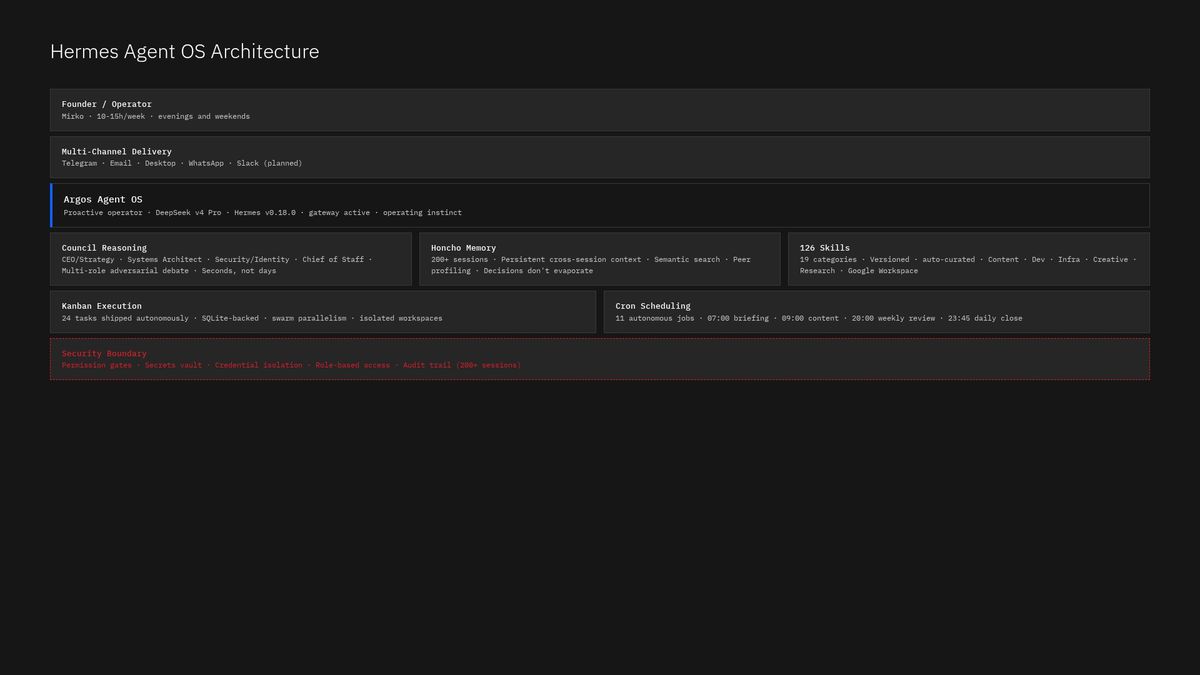
This is what an owned AI operating system looks like in production.
A person still decides what may be touched.
Does the same work keep causing problems?
Tell us what happens. We will review whether Groundlens can usefully help.